

Contact Information
+91 8595269126, +91 7042231814 info@marketinggo.in

Address
26B Third Floor, Desh Bandhu Gupta Rd, Block 26 B, Dev Nagar, Anand Parbat, Karol Bagh, New Delhi, Delhi 110005

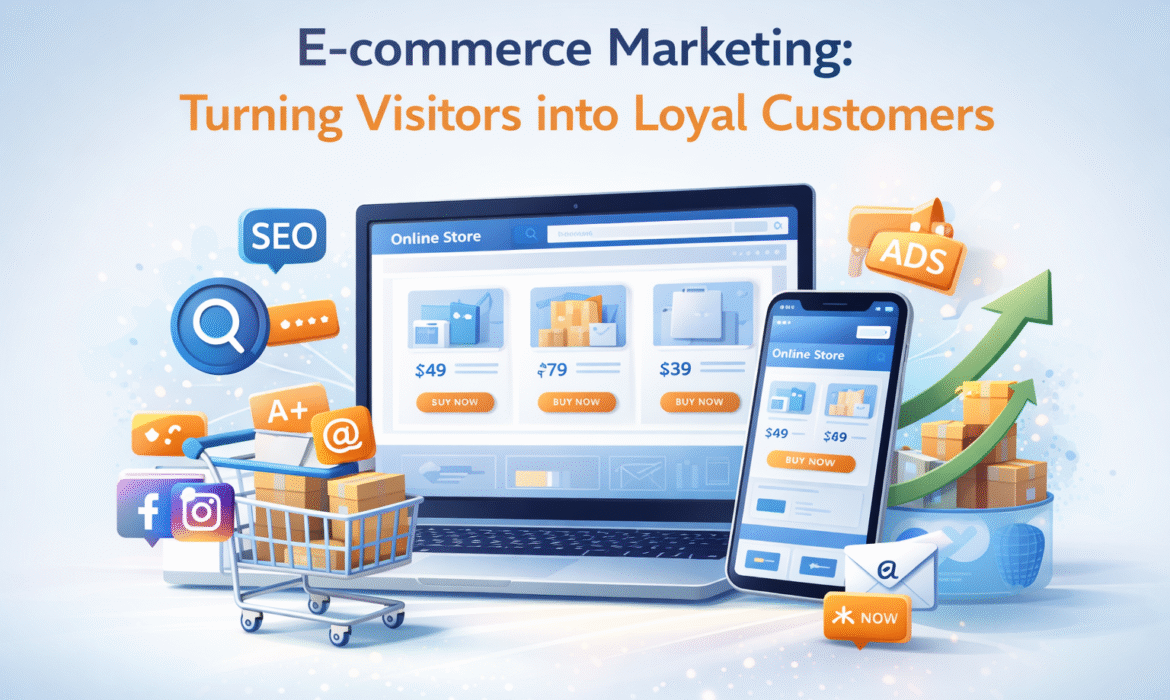
The existing competition in the market creates challenges which e-commerce companies must overcome to reach their growth targets. Online stores need to complete their initial operating timeframe before they can begin to earn stable financial returns. All business activities inside a company depend on e-commerce marketing because it operates as a critical business function. Business organizations require a strong e-commerce marketing plan which will help them draw in suitable customers who will buy products and establish enduring customer relations.
E-commerce marketing establishes an online advertising system which uses digital marketing methods to promote online stores together with their merchandise. The approach includes SEO and paid advertising and social media outreach and email distribution and content creation and remarketing efforts. The project aims to produce site traffic which will turn into customers who will return for future purchases.
Attracting appropriate site visitors constitutes a fundamental need for e-commerce websites which require efficient strategies to acquire customers that will help them achieve their business outcomes. Your product pages will achieve better Google rankings through SEO while paid advertisements deliver immediate traffic from users conducting product research. People use social media platforms to find new products and brands.
Product pages serve as the basic operational components which enable an e-commerce website to function properly. The product information which provides clear descriptions together with high-quality images and videos and pricing and customer reviews enables customers to build trust. The combination of a seamless checkout experience together with rapid website performance results in decreased cart abandonment rates and higher conversion rates.
Companies utilize Instagram and Facebook social media platforms for their online store marketing initiatives. The businesses use product posts which they combine with reels and influencer partnerships and shoppable features to build customer engagement while reaching their target audience. The existing social proof together with user-generated content increases the credibility of the source.
The most effective tool for driving e-commerce business growth stands as email marketing. The system uses abandoned cart emails together with product recommendations and order updates and special offers to bring customers back to the website. Existing customers who return to make purchases generate higher revenue than customers who make their first purchase.
Many people who visit an e-commerce website end up leaving the site without making a purchase. The ads for remarketing purposes show users the products they previously viewed to persuade them to finish their purchase. The strategy produces better conversion results together with increased return on investment.
E-commerce marketing success requires data analysis to determine effective strategies. The businesses achieve their best performance results by monitoring sales outcomes together with their traffic sources and conversion rates and customer behavior. Successful optimization processes lead to improved results which create ongoing business development.
E-commerce marketing serves as the fundamental method which helps businesses achieve online sales growth while developing customer loyalty. Businesses can establish an effective sales funnel through the combination of SEO with paid advertisements and social media and email marketing and remarketing. A brand can achieve faster growth through a well-designed e-commerce marketing strategy which helps them compete effectively in digital markets.
+91 8595269126, +91 7042231814 info@marketinggo.in
26B Third Floor, Desh Bandhu Gupta Rd, Block 26 B, Dev Nagar, Anand Parbat, Karol Bagh, New Delhi, Delhi 110005