

Contact Information
+91 8595269126, +91 7042231814 info@marketinggo.in

Address
26B Third Floor, Desh Bandhu Gupta Rd, Block 26 B, Dev Nagar, Anand Parbat, Karol Bagh, New Delhi, Delhi 110005

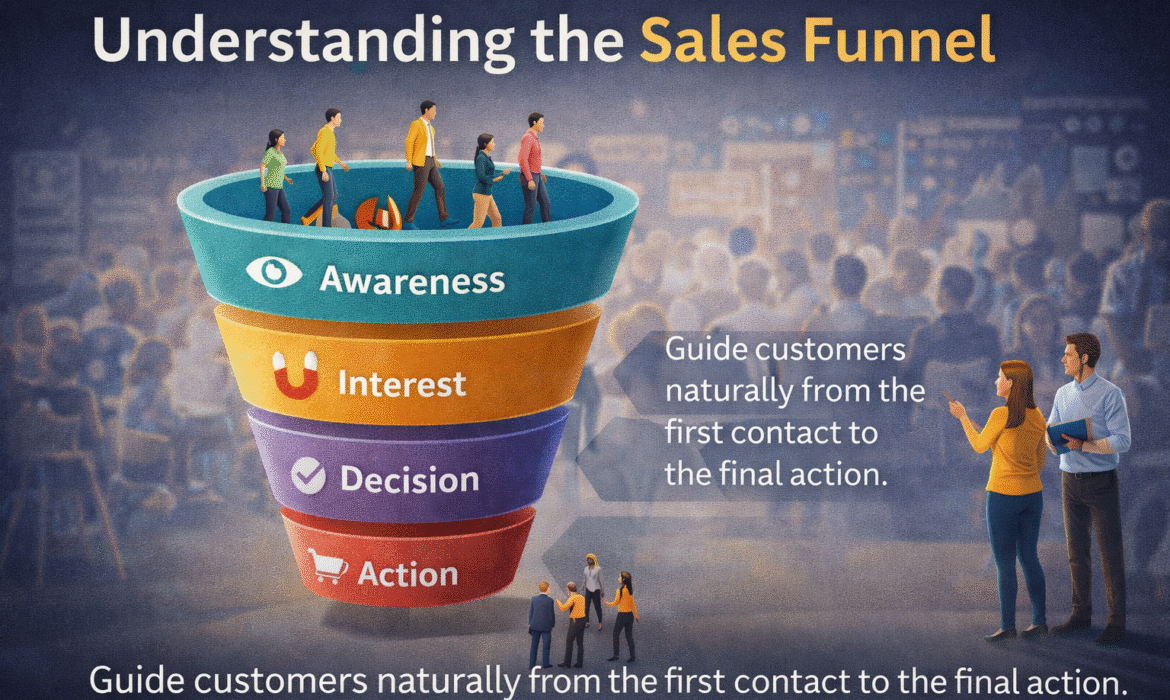
Most companies push sales the moment someone lands on their site or profile. Yet real life shows shoppers usually need more time before deciding.
Achieving results often ties back to structure – here, that means relying on a sales funnel.
A buyer moves through stages, starting when they first hear about a company until they finally buy something. Each phase shapes their decision, guided by how the brand presents itself along the way.
A handful of people who stop by aren’t looking to buy. Others wander through out of curiosity, while a small number show up knowing what they want. A few simply check prices elsewhere before deciding.
Seeing how people move through each step lets companies support them better along the way.
Right where things start, catching eyes matters most. Ways to make that happen include using posts on social media. Another path? Trying out search engine tricks. Videos online might pull people in too. Some find ads help grab interest early. Even sharing stories through email works sometimes
Notice matters more than making a sale right now.
A business gains trust not just by showing up, but by acting steady. Clear information plays a big role here. People stick around when things make sense. Slow choices, repeated, shape how reliable something feels. Over time, those moments add up. Quiet moments carry more weight than loud victories ever do. Month after month, small actions build what feels known. Coming back again? Proof something held on. When queries fade, trust usually grows
Little by little, daring choices begin to seem possible. When results appear, confidence grows – no pledges required.
That moment clicks once people see what comes next. Guide them without noise, one piece at a time – clear hints make it click
Most folks stick around when steps feel tiny. Because moving fast keeps things rolling, completion creeps closer. Something starting light usually finishes strong.
A path unfolds slowly when companies guide people through stages rather than demand quick decisions. This way, movement feels natural – conversion often follows quiet progression.
Funnels help companies grow steadier when they really get how to work them well. Most who figure it out end up ahead over time.
+91 8595269126, +91 7042231814 info@marketinggo.in
26B Third Floor, Desh Bandhu Gupta Rd, Block 26 B, Dev Nagar, Anand Parbat, Karol Bagh, New Delhi, Delhi 110005